
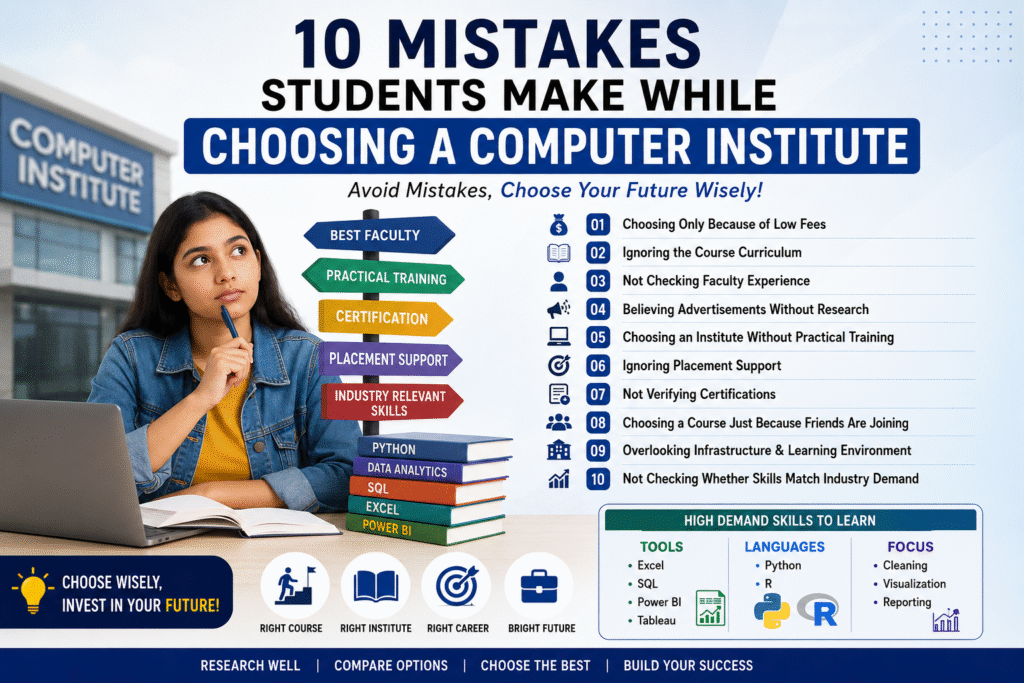
Choosing the right computer institute is one of the most important decisions you’ll make for your career. Whether you’re planning to learn Data Analytics, Digital Marketing, Web Development, or Programming, the quality of your training can directly impact your skills, confidence, and job opportunities.
Unfortunately, many students rush into admissions without proper research. They often choose an institute based on low fees, attractive advertisements, or recommendations without evaluating the course quality. These mistakes can lead to poor learning experiences and limited career growth.
If you’re searching for the best computer institute, understanding these common mistakes can help you make a smarter decision.
In this guide, we’ll discuss the 10 mistakes students make while choosing a computer institute and how you can avoid them.
1. Choosing an Institute Only Because It Has Low Fees
One of the biggest mistakes students make is selecting a computer institute solely because it offers the cheapest course.
Affordable fees may seem attractive, but low-cost courses often come with outdated content, limited practical sessions, or inexperienced trainers.
Instead of focusing only on price, compare the value you’ll receive. Look for updated course content, practical training, certifications, placement assistance, and experienced faculty.
Remember, your education is an investment in your future.
2. Ignoring the Course Curriculum
Many students enroll without checking what they’ll actually learn.
A quality computer course should include industry-relevant topics rather than outdated software.
For example, a modern Data Analytics course should cover:
Tools
Excel
SQL
Power BI
Tableau
Programming Languages
Python
R
Focus Areas
Cleaning
Data Visualization
Business Reporting
Updated skills improve your chances of getting hired after course completion.
3. Not Checking Faculty Experience
An experienced trainer makes learning easier.
Before joining any institute, find out:
How many years of teaching experience do the trainers have?
Have they worked in the industry?
Do they teach practical applications or only theory?
Learning from professionals with real-world experience helps students understand how skills are applied in actual workplaces.
4. Believing Advertisements Without Research
Colorful advertisements and social media promotions can be convincing, but they don’t always reflect the quality of training.
Instead of relying only on advertisements:
Read Google reviews.
Check student testimonials.
Visit the institute.
Attend a demo session.
Talk to current students if possible.
Doing your research gives you a more realistic picture of the institute.
5. Choosing an Institute Without Practical Training
Computer skills are learned by doing – not just by watching presentations.
Good institutes provide:
Live projects
Case studies
Hands-on assignments
Practice sessions
Industry scenarios
Practical exposure helps students build confidence and prepares them for interviews.
6. Ignoring Placement Support
Many students forget to ask one important question:
What happens after the course is completed?
A good computer institute should offer:
Resume building
Mock interviews
Placement assistance
Internship opportunities
Career guidance
Placement support can make the transition from learning to employment much smoother.
7. Not Verifying Certifications
Certificates add value only when they’re recognized by employers.
Before enrolling, ask:
Will I receive a certificate?
Is it industry-recognized?
Does it validate practical skills?
A reputable certification strengthens your resume and increases credibility during job applications.
8. Choosing a Course Just Because Friends Are Joining
Your friends’ career goals may be completely different from yours.
Some students enjoy programming, while others are more interested in marketing, design, or data analysis.
Instead of following others, choose a course based on:
Your interests
Career aspirations
Strengths
Future job opportunities
The right choice is the one that matches your personal goals.
9. Overlooking Infrastructure and Learning Environment
A professional learning environment can significantly improve your experience.
Visit the institute and check:
Computer labs
Internet connectivity
Software availability
Classroom facilities
Student support
Modern infrastructure creates a better environment for practical learning.
10. Not Checking Whether Skills Match Industry Demand
Technology changes rapidly.
Before joining any computer institute, ensure the course teaches skills that employers currently need.
For example, businesses today actively hire professionals with expertise in:
Excel
SQL
Power BI
Tableau
Python
R
These tools are widely used for cleaning, visualization, and reporting, making them valuable across industries such as finance, healthcare, retail, IT, logistics, and digital marketing.
Choosing an institute that teaches current technologies gives you a competitive advantage in the job market.
How to Choose the Right Computer Institute
Before making your final decision, ask these questions:
Does the curriculum match industry standards?
Are trainers experienced professionals?
Is practical learning included?
Are live projects part of the course?
Does the institute offer placement support?
Will I receive recognized certification?
Does the institute have positive student reviews?
Are modern tools and technologies covered?
If the answer is “yes” to most of these questions, you’re likely making a smart choice.
Final Thoughts
Choosing the right institute is just as important as choosing the right course. By avoiding these 10 mistakes students make while choosing a computer institute, you’ll save time, money, and effort while increasing your chances of building a successful career.
Whether you’re interested in Data Analytics, Digital Marketing, Programming, or Business Intelligence, look for an institute that focuses on practical learning, experienced faculty, updated technology, and career support.
Choose Shivsami for Courses that include Excel, SQL, Power BI, Tableau, Python, and R, along with practical training in cleaning, visualization, and reporting, can prepare you for today’s evolving job market.
Take your time, compare your options, and choose an institute that invests in your future – not just your enrollment.